

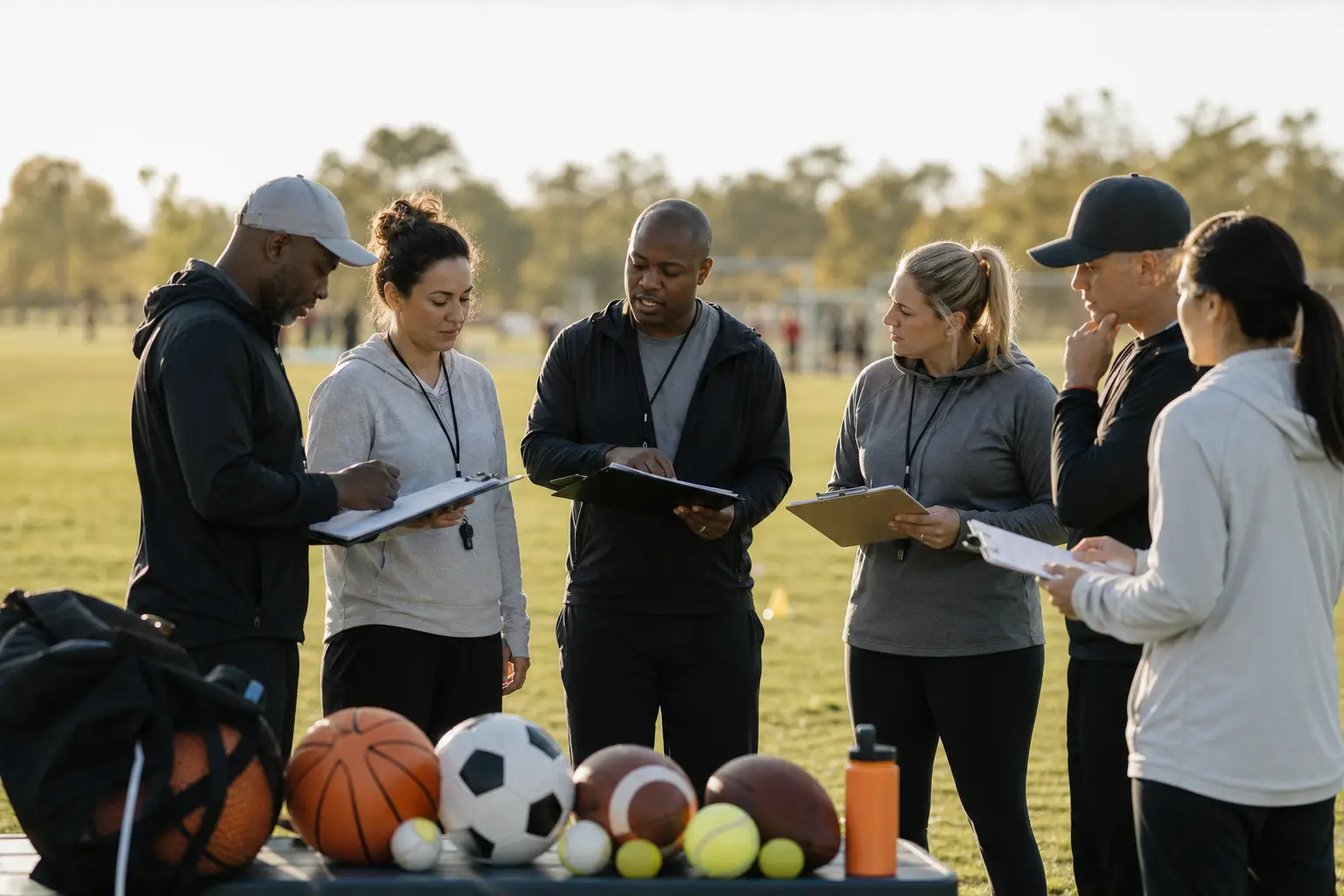
Volunteer coaches make community sports possible. Yet many clubs still recruit with a broad request for “anyone willing to help,” followed by a rushed handoff of rosters, schedules, and equipment.
A stronger system treats coaching as a volunteer pipeline rather than a last-minute vacancy. Research summarized by Aspen Institute Project Play highlights the need for youth-development education, screening, athlete-safety measures, and accessible support for coaches.
For clubs preparing for Fall 2026, this 30-day plan offers a practical, sport-agnostic framework. The goal is not to create an expert coach in one month. It is to give each volunteer a defined role, a safe starting point, usable resources, and someone to contact when questions arise.
Before Day One: Recruit for Specific Roles
Replace a single call for volunteer coaches with several clearly defined opportunities:
- Head coach: Leads practices and games while coordinating with the club.
- Assistant coach: Supports instruction, supervision, setup, and athlete engagement.
- Practice helper: Assists with assigned activities without carrying the full coaching workload.
- Team administrator: Manages schedules, reminders, and approved communications.
- Equipment coordinator: Organizes the distribution, collection, and tracking of equipment.
- Substitute volunteer: Provides short-term coverage when a regular coach is unavailable.
Each description should state the duties, expected weekly commitment, season dates, required screening or education, reporting relationship, and support provided by the club. Clear position descriptions and targeted recruitment are part of the volunteer-management framework described in the AmeriCorps volunteer-management literature review.
Recruit beyond the current parent email list. Candidates may include former players, alumni families, teachers, college students, and community recreation partners. Apply the same relevant screening and qualification process to every candidate.
Match people to roles based on availability, interests, skills, and comfort level. Do not pressure every willing volunteer to become a head coach.
Days 1–7: Establish the Safety Gate
No volunteer should begin working with athletes until the club has completed its applicable pre-participation requirements. Create one checklist, assign an owner, and record completion centrally.
The checklist should cover applicable background-check rules, governing-body requirements, codes of conduct, reporting procedures, emergency protocols, and policies for interactions between adults and minors. Requirements can vary by state, sport, league, school, governing body, and organizational affiliation.
Organizations connected to the U.S. Olympic and Paralympic Movement should review their governing body’s current requirements and the Minor Athlete Abuse Prevention Policies. Independent programs should not assume that every provision applies identically to them, but they should maintain safeguarding policies appropriate to their circumstances.
Use Authoritative Safety Education
Include concussion recognition and response in onboarding through official education rather than an improvised club summary. The CDC’s HEADS UP training resources help youth coaches recognize possible concussion signs and understand appropriate response steps.
Clubs must also verify current state, league, school, and governing-body requirements. Coaches should know where to find the relevant protocol and whom to contact. They should not be asked to diagnose an injury or make treatment decisions.
Days 8–14: Provide a Ready-to-Run Starter Kit
A first-time coach does not need an overwhelming digital library. Start with a compact set of resources focused on the opening weeks:
- The club’s values, behavior expectations, and communication rules.
- Emergency contacts and incident-reporting procedures.
- An opening-day checklist covering arrival, attendance, equipment, and dismissal.
- Two or three ready-to-run practice plans with simple setup and timing instructions.
- Age-appropriate guidance for activities, participation, and instruction.
- A basic game-day or event-day routine.
- Procedures for cancellations, schedule changes, and facility concerns.
Make the resources easy to access on a phone and organize them around immediate tasks. U.S. Soccer’s Beginner Volunteer Coach Survival Guides provide one example of step-by-step, age-specific material that emphasizes fun, safety, and development.
The same principle can work in any sport: show the volunteer what a successful first session looks like, not only what future coaching education might cover.
Days 15–21: Make Coaching a Shared Assignment
Reduce the burden on newcomers by designing shared support before the first practice. Pair each new coach with an experienced mentor, assign assistants early, centralize practice resources, and identify one coordinator who can answer operational questions.
The mentor does not need to attend every session. A practical arrangement can include a short introductory conversation, availability for opening-week questions, and one planned follow-up.
U.S. Soccer’s volunteer-led coaching model illustrates the value of structure, clear expectations, central coordination, shared resources, and lower-pressure ways to contribute.
Days 22–30: Address Friction Early
Do not wait for an end-of-season survey to learn that a coach was confused after the first practice. Use three brief checkpoints during the opening month:
- After the first practice: Ask what was unclear, what took longer than expected, and whether the coach had the necessary equipment and information.
- After the first game or event: Review communication, arrival procedures, role boundaries, and recurring athlete or parent-management questions.
- Near day 30: Discuss workload, support, optional learning, and changes that would help future volunteers.
Give each resulting action a named owner. If equipment pickup is confusing, revise the instructions. If one coach is handling all communications, assign administrative help. If planning takes too long, provide another ready-to-run practice.
Build Retention Into Onboarding
Retention begins before the season ends. AmeriCorps identifies training, support, communication, relationships, recognition, and feedback as important volunteer-engagement and retention practices.
Recognize contributions in specific, proportionate ways. Thank volunteers for preparing practice spaces, helping athletes participate, or communicating schedule changes clearly. Offer optional learning opportunities and ask about future interest before the current season concludes. A head coach may want a narrower role next year, while a practice helper may be ready for more responsibility.
Track a Small Set of Measures
A basic spreadsheet can help a club distinguish a recruitment shortage from an onboarding or support problem. Track:
- Applicants by recruitment channel.
- Completion of required onboarding steps.
- Time needed to fill each role.
- Withdrawals during the first month.
- Completed mentor contacts and check-ins.
- The percentage of volunteers returning the following season.
The Fall 2026 Action Plan
Before recruiting, create separate role descriptions. Before participation, establish a documented safety gate. Before the first practice, provide a concise starter kit and assign support. During the opening month, conduct three short check-ins and resolve practical problems promptly.
This approach gives first-time coaches a clearer, safer path into volunteering while providing clubs with a repeatable system for developing and retaining their coaching teams.
Sources & Further Reading
- State of Play 2025: Coaching Trends — Aspen Institute Project Play
- Engaging Volunteers: A Comprehensive Literature Review — AmeriCorps
- Beginner Volunteer Coach Survival Guides — U.S. Soccer
- No Trained Coaches? No Problem! — U.S. Soccer
- Minor Athlete Abuse Prevention Policies — U.S. Center for SafeSport
- HEADS UP Online Training Courses — Centers for Disease Control and Prevention